

Paediatric Robotic Surgery for Children
Advanced Minimally Invasive Surgery for Children in North Queensland
As a parent, the prospect of your child needing surgery can be overwhelming. Naturally, families want the safest treatment, the smallest scars, the quickest recovery and the best possible outcome.
Paediatric robotic surgery represents one of the most significant advances in modern children's surgery. Using state-of-the-art robotic technology, many complex operations can now be performed through a series of small incisions while maintaining exceptional surgical precision.
Dr Janani Krishnan is a Consultant Paediatric Surgeon and Paediatric Urologist with expertise in robotic-assisted surgery for children. She leads one of Australia's pioneering paediatric robotic surgery programs, providing advanced surgical care for children across North Queensland, Queensland and regional Australia.
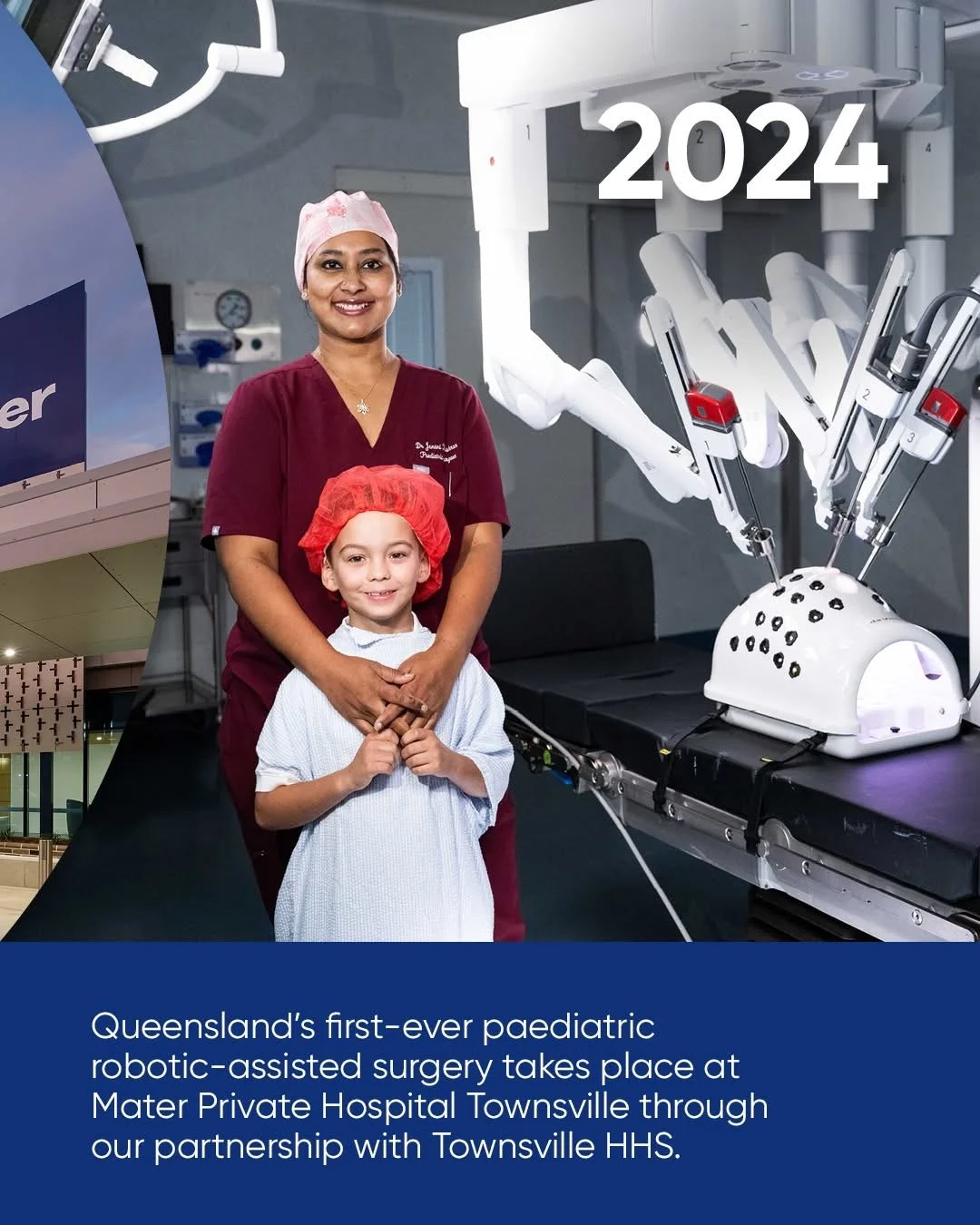
What Is Robotic Surgery?
Robotic surgery is an advanced form of minimally invasive surgery that allows surgeons to perform complex procedures through several small incisions.
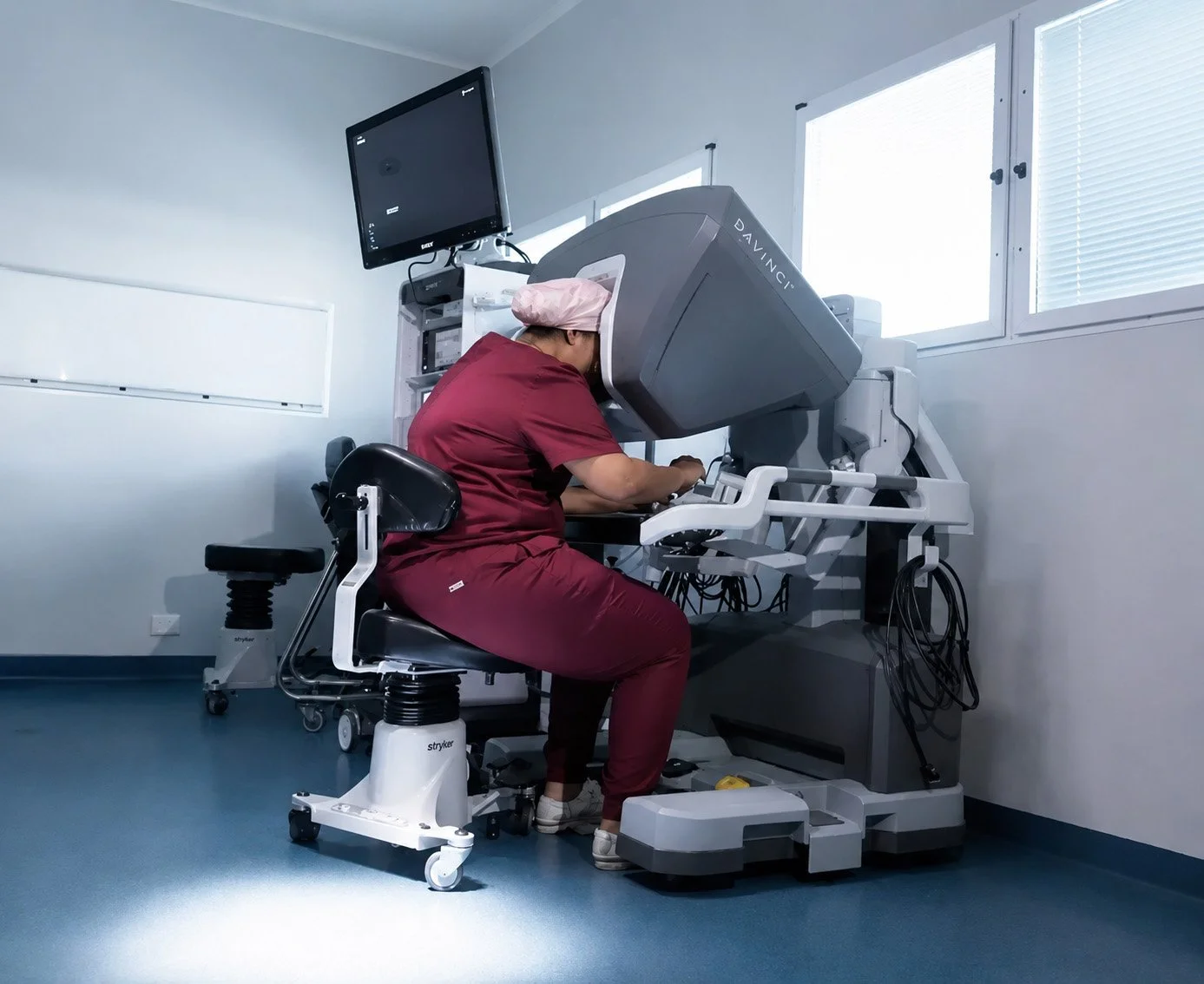
Using the da Vinci Surgical System, the surgeon sits at a specialised console and controls robotic instruments with remarkable precision. Every movement of the robotic instruments is directed entirely by the surgeon.
Contrary to common belief, the robot does not perform the operation independently. It cannot make decisions, move on its own or replace the surgeon. Instead, it acts as an extension of the surgeon's hands, providing greater precision, improved dexterity and enhanced visualisation.
The robotic platform offers several important advantages:
Three-dimensional high-definition vision
Magnified surgical views
Tremor filtration
Wristed instruments that mimic natural hand movements
Improved access to confined anatomical spaces
Enhanced precision during reconstructive surgery
These features are particularly valuable when operating on the delicate structures of the urinary tract in children.
Why Is Robotic Surgery Useful in Children?
Many paediatric surgical procedures involve intricate reconstruction of tiny anatomical structures. Traditional open surgery often requires larger incisions to gain adequate access to these areas.
Robotic technology allows surgeons to perform these complex reconstructions through much smaller incisions while maintaining excellent visibility and precision.
Potential benefits may include:
-
Smaller Incisions
Most robotic procedures are performed through several small incisions rather than a large open incision.
-
Reduced Pain
Many children experience less postoperative discomfort and require less pain medication.
-
Faster Recovery
Children often mobilise earlier and return to normal activities more quickly.
-
Shorter Hospital Stay
Depending on the procedure, hospital stays may be shorter compared with traditional open surgery.
-
Improved Cosmetic Results
Smaller incisions generally result in smaller scars.
-
Enhanced Surgical Precision
The robotic platform allows delicate reconstruction with exceptional accuracy.
While robotic surgery offers many advantages, it is important to understand that not every child or every condition is suitable for a robotic approach. The safest and most effective operation will always be recommended based on your child's individual circumstances.
Conditions Commonly Treated Using Robotic Surgery
Hydronephrosis and Ureteropelvic Junction (UPJ) Obstruction
Hydronephrosis refers to swelling of the kidney caused by impaired drainage of urine.
One of the most common causes is a narrowing where the kidney joins the ureter, known as a ureteropelvic junction obstruction.
Many children diagnosed with hydronephrosis require only observation. However, when kidney drainage becomes significantly impaired, surgery may be recommended.
Robotic pyeloplasty allows precise reconstruction of the narrowed segment while preserving healthy kidney tissue and function.
The robotic approach has become one of the most widely performed paediatric robotic procedures worldwide.
Duplex Kidneys
A duplex kidney occurs when a child has two drainage systems within the same kidney.
Some duplex systems function normally and require no treatment. Others may be associated with recurrent urinary tract infections, reflux or obstruction.
Robotic surgery can be used to perform:
Heminephrectomy
Ureterectomy
Ureteroureterostomy
Reconstructive procedures
The magnified visualisation provided by robotic surgery is particularly valuable when preserving healthy kidney tissue.
Neurogenic Bladder
Children with conditions such as spina bifida may develop neurogenic bladder dysfunction.
In some cases, reconstructive surgery may be required to improve bladder emptying or continence.
Robotic techniques may be used during procedures such as:
Mitrofanoff creation
Bladder reconstruction
Complex urinary tract reconstruction
Non-Functioning Kidneys
Occasionally, part or all of a kidney may no longer function effectively because of congenital abnormalities, severe reflux or obstruction.
Robotic surgery may be used for:
Nephrectomy
Partial nephrectomy
Heminephrectomy
These procedures can often be performed through small incisions while minimising disruption to surrounding tissues.
Is Robotic Surgery Safe?
Patient safety is always our highest priority. Robotic surgery has been performed in children for more than two decades and is now routinely utilised at leading children's hospitals around the world.
Large international studies have demonstrated:
Excellent success rates
Low complication rates
High parent satisfaction
Comparable or improved outcomes compared with traditional approaches
As with any surgical procedure, risks do exist and vary according to the operation being performed.
Potential risks may include:
Bleeding
Infection
Injury to surrounding structures
Anaesthetic complications
Need for additional procedures
Conversion to open surgery if necessary
These risks are discussed in detail during consultation and surgical planning.
Who Is Suitable for Robotic Surgery?
Not every child is a candidate for robotic surgery.
Factors that influence suitability include:
Child's age and size
Underlying condition
Previous surgery
Anatomical complexity
Overall health
Each patient is assessed individually. Our primary goal is not to perform robotic surgery whenever possible. Rather, it is to determine the safest and most effective treatment for each child. For some children, robotic surgery may offer significant advantages. For others, open surgery or conventional laparoscopy may remain the preferred approach.
International Training and Collaboration
Successful robotic surgery programs depend on rigorous training, mentorship and ongoing professional development.
Dr Krishnan has undertaken specialised robotic surgery training and continues to collaborate with internationally recognised leaders in paediatric robotic surgery.
The program is committed to continuous improvement, innovation and excellence in children's surgical care.
Frequently Asked Questions
Does the robot perform the operation?
No. The surgeon performs the entire operation and controls every movement of the robotic instruments.
Is robotic surgery better than open surgery?
Not necessarily. The best approach depends on your child's condition, anatomy and overall circumstances.
Will my child have scars?
Yes. However, robotic surgery generally involves several small incisions rather than one larger incision.
How long will my child stay in hospital?
Hospital stay varies depending on the operation being performed. Many children return home sooner than they would following traditional open surgery.
Is robotic surgery available for all paediatric conditions?
No. Only selected conditions and patients are suitable for robotic surgery.
Disclaimer: This web site is not intended as a substitute for your own independent health professional's advice, diagnosis or treatment. Always seek the advice of your physician or other qualified health provider within your country or place of residency with any questions you may have regarding a medical condition.